PSA CENODEATH: The Complete 2026 Guide to the Certificate of No Death Record
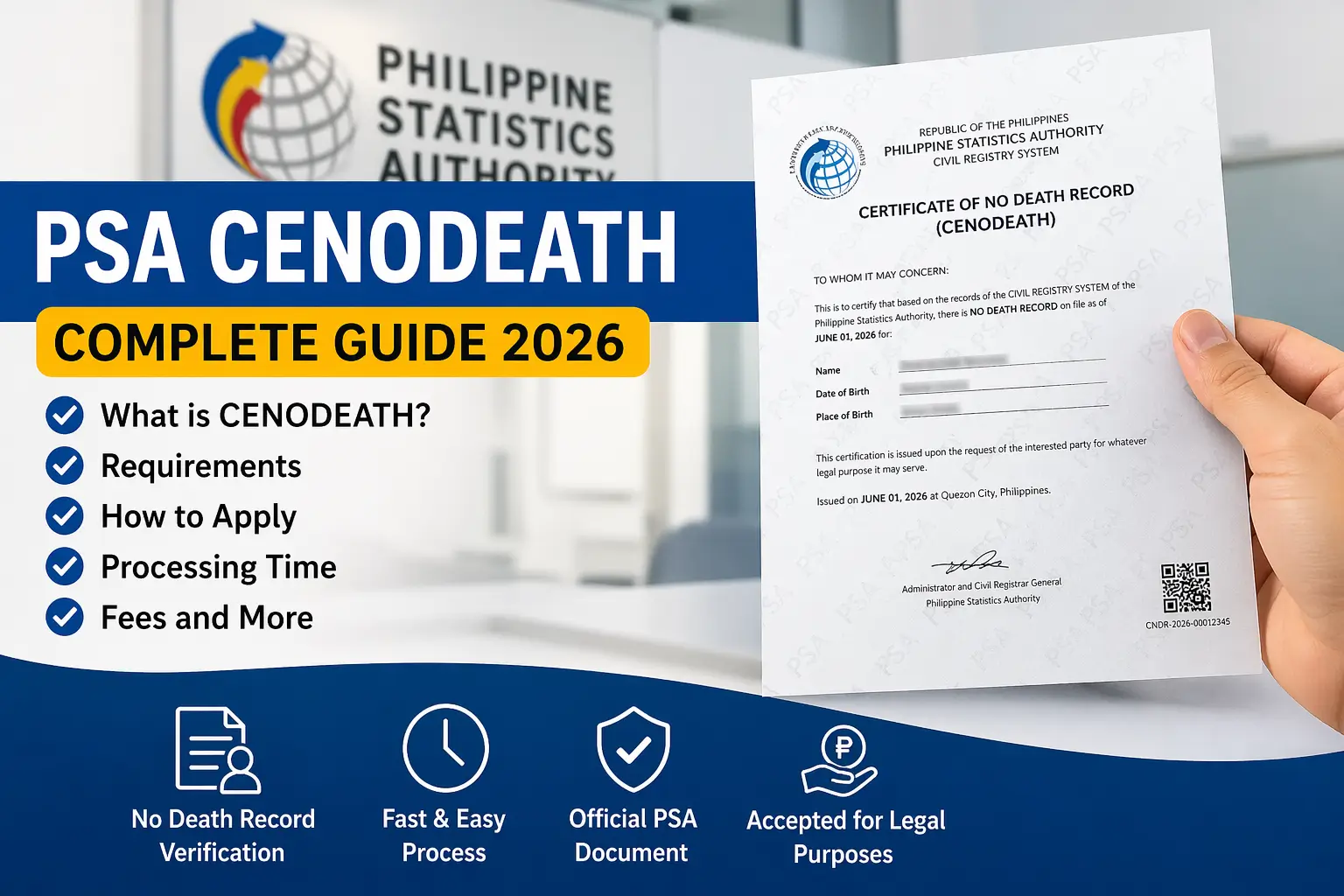
PSA CENODEATH: The Complete 2026 Guide to Getting a Certificate of No Death provides everything you need to know about this important PSA-issued document. A Certificate of No Death (CENODEATH) is often required when there are questions about a person’s death records or when proof is needed that no death record exists under a specific name.
Whether you’re applying for legal, government, or personal purposes, understanding the requirements and request process can save you time and avoid unnecessary delays. This guide explains what a PSA CENODEATH is, who may need it, and how to obtain one in 2026.
Quick Answer
A PSA CENODEATH (Certificate of No Death) is an official document from the Philippine Statistics Authority confirming that, as of the date of issuance, no death record exists for a named individual in the PSA’s civil registry database. It does not certify that someone is alive — only that no death has been registered. It costs ₱210 walk-in or ₱420 online (inclusive of delivery), takes about one working day to process, and never expires, though many institutions ask for a copy issued within the last six months.
What Is a PSA CENODEATH?
CENODEATH stands for Certificate of No Death sometimes also called an Advisory on Deaths when read in the negative. It’s one of two negative/no-record certifications the PSA issues for the general public, the other being CENOMAR (Certificate of No Marriage).
In plain terms: the PSA checks its national civil registry database for any death record matching the name and birth details you provide. If nothing turns up, it issues a CENODEATH stating exactly that no registered death record was found as of the search date.
That distinction matters more than people expect. A CENODEATH is not a certificate of life. It’s a certificate of absence — absence of a specific record in a specific government database. If a death happened but was never reported to the local civil registrar, or if it was registered under a slightly different name spelling, the PSA’s search could still come back negative even though the person has, in fact, passed away. Lawyers and claims adjusters who work with these documents regularly understand this limitation and usually pair a CENODEATH with other evidence (affidavits, witness statements, barangay certifications) rather than relying on it alone.
Quick Facts Table
| Detail | Information |
|---|---|
| Issuing agency | Philippine Statistics Authority (PSA) |
| Legal basis | Civil registry functions under the Philippine Statistical Act of 2013 (RA 10625) |
| Walk-in fee | ₱210 per copy |
| Online fee (with delivery) | ₱420 per copy |
| Processing time | Typically 1 working day (8 office hours), longer if manual verification is triggered |
| Validity | Does not expire, but many agencies want one issued within 6 months |
| Security feature | QR code for digital verification |
CENODEATH vs. Related PSA Documents
People frequently confuse CENODEATH with a death certificate or with CENOMAR. Here’s how they differ.
| Document | What It Confirms | Typical Use |
|---|---|---|
| Death Certificate | A death was registered, with cause, date, and place | Settling estates, claiming death benefits, closing accounts |
| CENODEATH | No death record was found for the named individual | Proving someone has no registered death, correcting erroneous records, supporting pension/insurance claims for missing persons |
| CENOMAR | No marriage record exists for the named individual | Proving single status for marriage applications, visa requirements, certain legal filings |
| Birth Certificate | Birth was registered, with parentage and birth facts | Identity verification, passport applications, school enrollment |
If you’re not sure which document you actually need, it usually comes down to what the requesting institution is asking you to prove. “Prove this person is not deceased in our records” → CENODEATH. “Prove this person died and provide details” → Death Certificate.
Who Needs a CENODEATH and Why
A CENODEATH shows up in situations that are often emotionally or legally sensitive. Some of the most common scenarios:
- Insurance and pension claims involving a missing person. Insurers and government pension agencies (like GSIS or SSS) sometimes require a CENODEATH as part of the documentation when a beneficiary is processing a claim tied to someone who is missing but not legally declared dead.
- Estate and inheritance disputes. Courts handling estate settlement may request a CENODEATH to establish, on the record, whether a potential heir or claimant has any registered death entry.
- Correcting a mistaken “deceased” status. It does happen — a person’s record gets erroneously flagged or confused with someone else’s death record. A CENODEATH is the formal first step toward clearing that up with government agencies.
- Confirming status when no death certificate can be produced. Some government transactions need proof either way; if a death certificate doesn’t exist, a CENODEATH fills that evidentiary gap.
- Overseas Filipino Workers (OFWs) and their families handling legal or immigration matters abroad, where a missing or unregistered relative’s status needs to be clarified for a foreign agency or court.
If you’re dealing with any of the above, expect the requesting party (a bank, court, insurer, or government office) to specify the exact wording they want on the request form, since purpose-of-request fields affect how the certificate is processed.
Who Is Allowed to Request One
PSA limits who can request a CENODEATH for someone else, in line with the Data Privacy Act of 2012. You can request a CENODEATH if you are:
- The document owner (the person whose name is being searched), provided you’re of legal age.
- The owner’s child, provided the child is at least 18 years old.
- The owner’s parent.
Requesting a CENODEATH for anyone outside this circle say, a sibling, cousin, or unrelated party generally requires going through additional channels or providing notarized authorization, and in many cases isn’t something the standard online or walk-in process supports without that paperwork. If you’re a representative acting on someone’s behalf, bring a signed authorization letter plus a photocopy of the requester’s valid ID, in addition to your own ID.
How to Get a CENODEATH Online
Ordering online is the faster route for most people, especially if you’re not near a PSA outlet or you’re abroad. The general flow looks like this: Step-by-Step Process
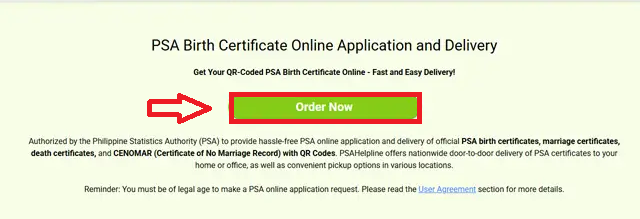
- Step 1: Go to an official, PSA-authorized online ordering platform. PSAHelpline.ph is one of PSA’s authorized online channels for civil registry documents, including CENODEATH.
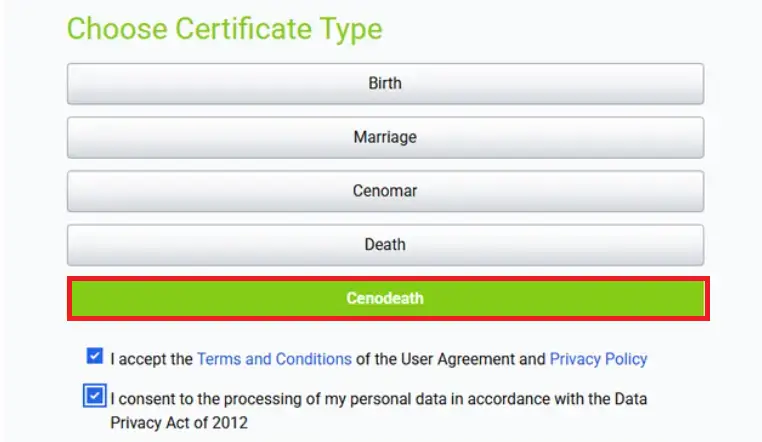
- Step 2: Select “CENODEATH” as your document type and confirm the terms and conditions.
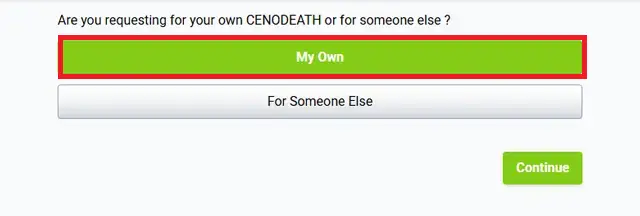
- Step 3: Indicate whose record you’re requesting your own, or someone else’s (limited to the eligible relationships listed above).
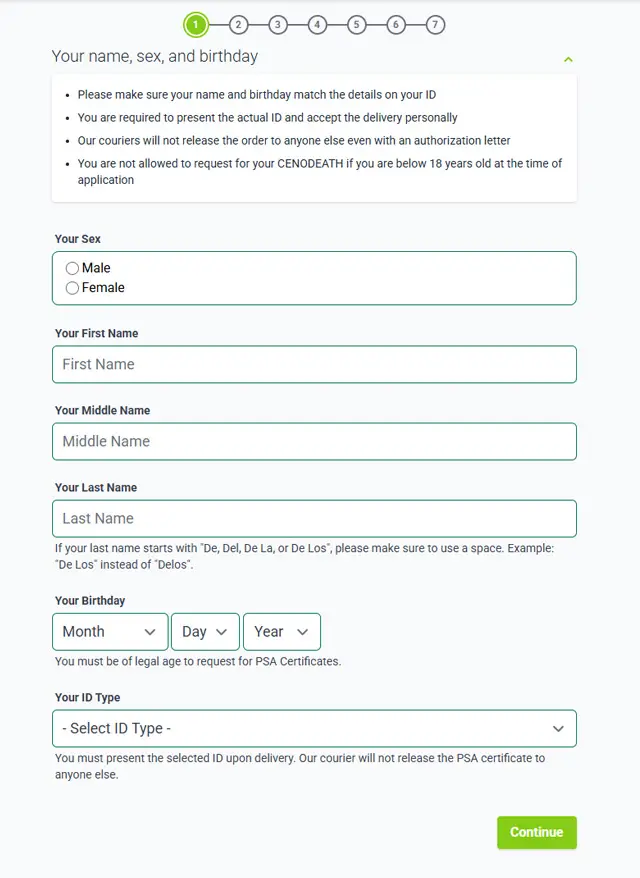
- Step 4: Fill in your own identifying details full name, birth date, sex, civil status, and a valid government-issued ID.
- Step 5: Enter the certificate owner’s details full name, date and place of birth, and parents’ names, exactly as they appear on existing civil registry records.
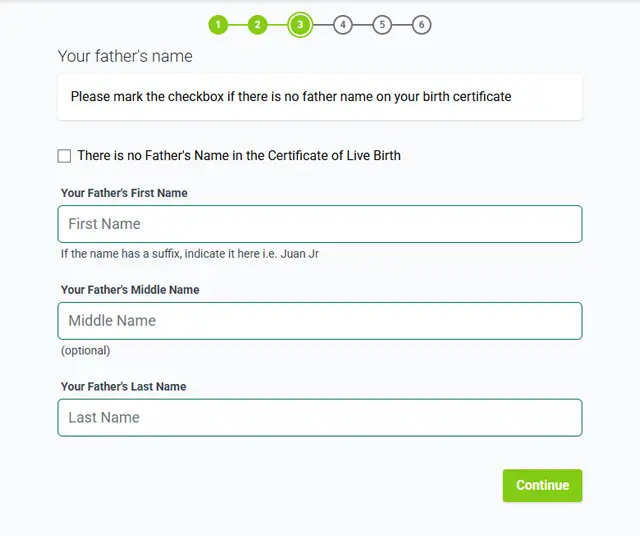
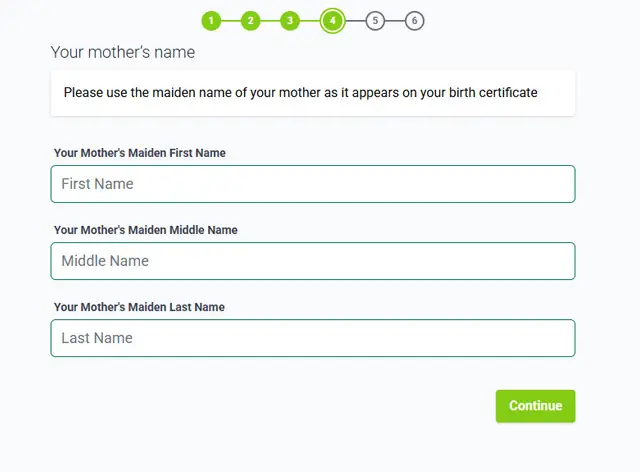
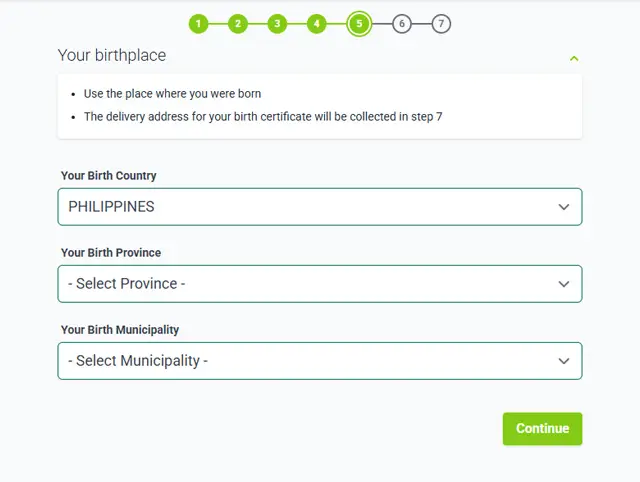
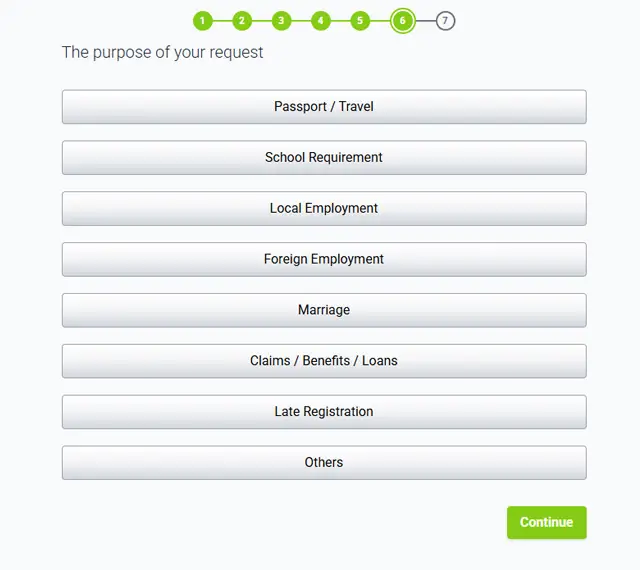
- Step 6: State your purpose for the request. You’ll choose from a list of standard purposes (claims, legal proceedings, record correction, etc.).
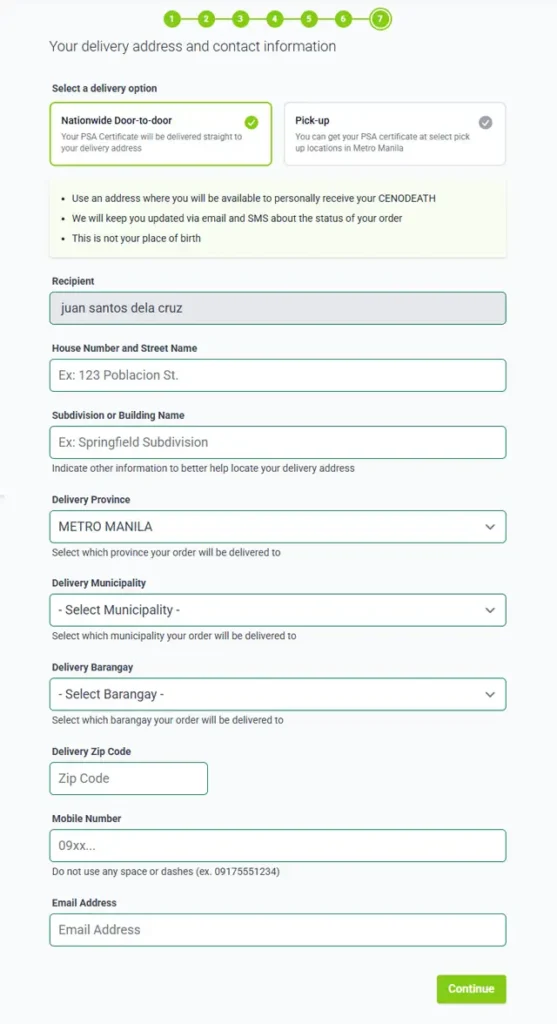
- Step 7: Provide delivery details your address or a pickup location, mobile number, and email.
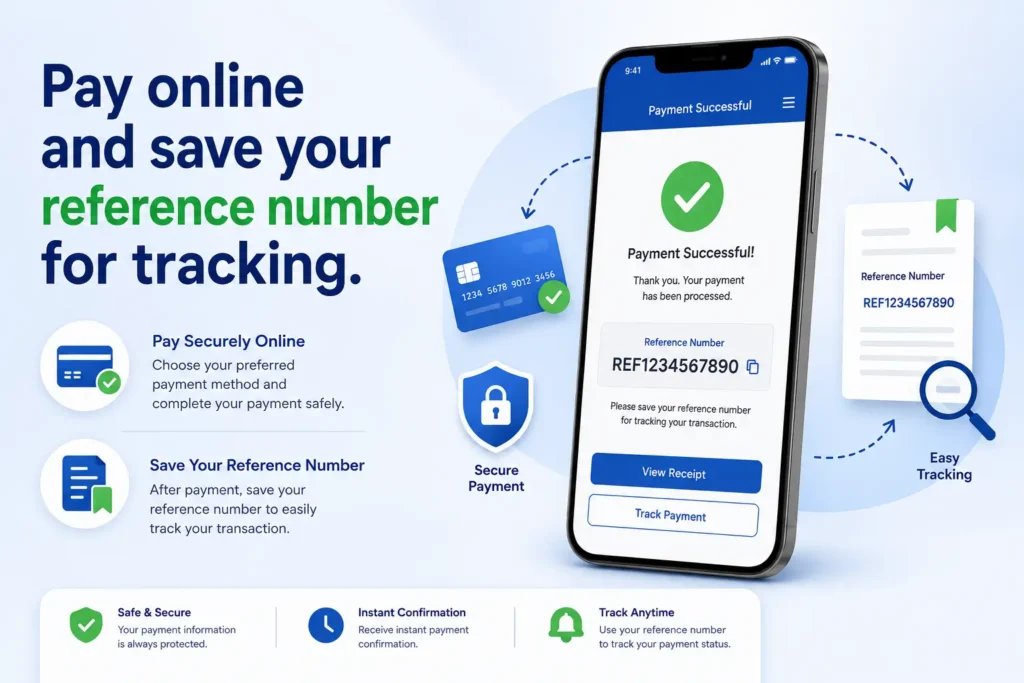
- Step 8: Pay online and save your reference number for tracking.
Payment Methods Typically Accepted
- Credit card (Visa/Mastercard)
- Bank/ATM bills payment (BancNet)
- GCash and Maya e-wallets
- Over-the-counter at 7-Eleven (CLIQQ) or Bayad Center outlets
Practical Tips Before You Submit
- Match every detail name, birth date exactly to your valid ID and to the owner’s existing civil registry entries. Mismatches are the single biggest cause of delay.
- Use a delivery address where someone can personally receive and sign for the document, since a valid ID is required at the point of delivery.
- If you might not be home, assign an Authorized Person to Receive when you place the order, rather than waiting until delivery day.
How to Get a CENODEATH Through a Walk-In Appointment
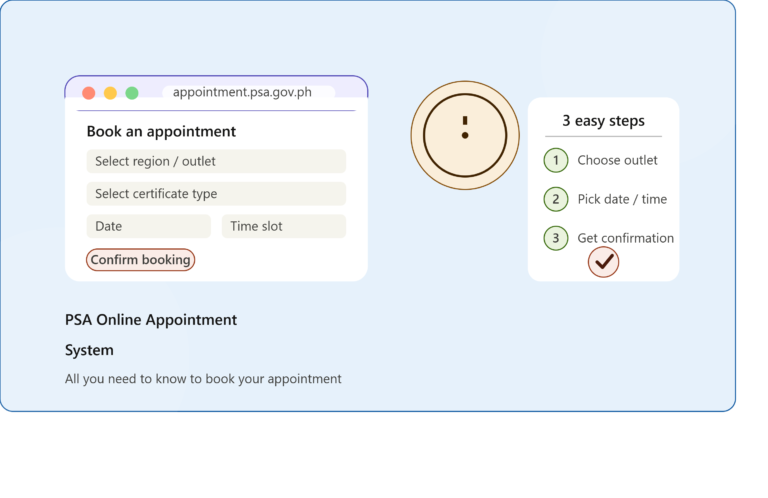
Some situations special annotations, manual verification cases, or simply a preference for in-person transactions call for a walk-in visit to a PSA Civil Registry System (CRS) outlet. PSA has shifted to a strict appointment-based system, so walking in without a booked slot generally won’t work anymore.
- Book a free appointment through PSA’s official online appointment portal, choosing your preferred CRS outlet, date, and time.
- Prepare your requirements: a valid government-issued ID, and if you’re requesting on someone else’s behalf, a signed authorization letter plus a photocopy of the owner’s ID.
- Arrive early — at least 15–30 minutes before your scheduled slot, since late arrivals typically forfeit the appointment.
- Present your appointment confirmation to PSA staff for validation.
- Fill out the application form and get your queue number.
- Pay the certificate fee at the counter (cash is the most reliable option; some outlets accept GCash or Maya via QR code, but availability varies).
- Return on the scheduled release date to claim your CENODEATH, presenting your receipt and valid ID again.
Accepted Valid IDs (Examples)
PSA accepts a wide range of government-issued IDs, including:
- Philippine Identification Card (national ID) or ePhilID
- Philippine passport
- Driver’s license
- UMID (SSS/GSIS unified ID)
- PRC ID, IBP ID
- Voter’s ID, Postal ID
- Senior Citizen’s ID, PWD ID
- NBI clearance, PNP ID
Check the specific outlet’s posted list before your visit, since accepted ID types can be updated.
Online vs. Walk-In Cost and Time Comparison
| Factor | Walk-In | Online |
|---|---|---|
| Document fee | ₱210 | ₱420 (includes courier/service fee) |
| Appointment booking | Free, but mandatory | Not required |
| Transportation cost | ₱80–₱200+ depending on distance | ₱0 |
| Time investment | Half-day to full-day, including travel and waiting | A few minutes to place the order |
| Delivery | You collect it in person at the outlet | Delivered to your address or pickup point |
| Best for | Those near a PSA outlet, or needing special annotation/manual verification handling | OFWs, provincial residents, people with limited mobility, or anyone prioritizing convenience |
When you factor in transport, time off work, and the hassle of securing an appointment slot, the online option’s higher sticker price often evens out or comes out ahead for people who don’t live near a CRS outlet.
What You’ll Actually Receive
Depending on what the PSA database search turns up, you’ll get one of three possible outcomes:
- CENODEATH — if no death record is found, this is the negative certification you requested.
- Death Certificate / Advisory of Death — if the search actually finds a matching death record, the PSA will issue this instead, since a CENODEATH can’t truthfully be issued when a record exists.
- Manual Verification Advisory — if the record isn’t available in the searchable digital database but a positive entry appears in PSA’s broader records system, your request goes into manual verification. This adds processing time, and you’ll be notified by SMS once the document is ready.
All current PSA certificates, including the CENODEATH, are issued with a QR code. Scanning it allows institutions to verify the document’s authenticity directly against PSA’s database, which helps prevent forged or altered copies from being accepted.
Common Mistakes That Delay Processing
- Misspelled names or wrong birth dates. Even a single letter off from the civil registry spelling can trigger manual verification.
- Requesting on behalf of someone outside the allowed relationships without proper authorization documents.
- Forgetting to check email for status updates, payment confirmations, or requests for additional information.
- Not arranging an authorized recipient when delivery is expected and you won’t be home.
- Assuming CENODEATH proves someone is alive. It doesn’t and presenting it that way to a requesting institution can cause confusion or rejection if they needed a different kind of proof.
FAQs About PSA CENODEATH
What is the difference between CENODEATH and a death certificate?
A death certificate confirms a death was registered and provides details like cause and date of death. A CENODEATH confirms the opposite — that no death record exists for that person in PSA’s database.
Does a CENODEATH prove that someone is alive?
No. It only confirms the absence of a registered death record. A person could be alive, or their death could simply be unregistered, and the result would look the same.
How long does it take to process a CENODEATH request?
Standard processing is around one working day (roughly 8 office hours), not counting queueing time. If the request requires manual verification, it can take longer.
Does a CENODEATH expire?
The document itself does not have a formal PSA-mandated expiration date. However, many requesting institutions only accept certificates issued within the past six months, so check with whoever is requiring the document.
Who can request a CENODEATH for another person?
Only the document owner, the owner’s child (if of legal age), or the owner’s parent can request it directly under standard PSA rules. Other relatives generally need additional authorization.
How much does a CENODEATH cost?
₱210 per copy for a walk-in request at a PSA CRS outlet, or ₱420 per copy when ordered online with delivery included.
Can I request a CENODEATH if I’m under 18?
No. Requesters must be of legal age (18 or older) to request a CENODEATH, whether for themselves or for an eligible relative.
What happens if PSA finds a death record when I requested a CENODEATH?
You’ll receive a Death Certificate or Advisory of Death instead, since the PSA cannot issue a “no record” certificate when a matching record actually exists.
Is online ordering of PSA certificates safe?
Yes, when done through PSA-authorized online channels. Look for features like QR-coded certificates, secure payment gateways, and order tracking — these are standard markers of a legitimate, authorized service.
What ID requirements apply when claiming a CENODEATH in person?
You’ll need to present a valid, unexpired government-issued ID matching the name on your application, both when you submit the request and when you claim the certificate.
Conclusion
A PSA CENODEATH is a narrow but important document: it tells you, with government authority behind it, that no death record exists for a named person in the PSA’s civil registry as of the search date — nothing more, nothing less. That distinction is worth keeping in mind any time you’re using this certificate to support a claim, correct a record, or settle a legal matter, since it’s evidence of an absence, not proof of life.
If you need one, your two paths are straightforward: order online for convenience and delivery, or book a free appointment and visit a CRS outlet in person if your situation calls for direct handling (like manual verification or special annotations). Either way, double-check that every name, date, and detail matches existing civil registry records before you submit — that single step prevents the vast majority of delays people run into.
Key takeaways:
- CENODEATH ≠ proof of life it only confirms no registered death record exists.
- Walk-in costs ₱210; online with delivery costs ₱420.
- Only the document owner, their adult child, or their parent can request it directly.
- Processing typically takes about one working day, barring manual verification.
- The certificate doesn’t expire, but most institutions want one issued within six months.