PSA Celebrates the 32nd Civil Registration Month: Theme, Activities, and What It Means for Filipinos
PSA Celebrates the 32nd Civil Registration Month: Theme, Activities, and What It Means for Filipinos marks an important nationwide observance that emphasizes the value of civil registration in the Philippines. Organized by the Philippine Statistics Authority (PSA), this annual event raises awareness about the importance of registering vital life events such as births, marriages, and deaths. In 2026, the celebration includes various activities and programs designed to educate the public and strengthen civil registration services across the country.
Quick Answer Box
What is the 32nd Civil Registration Month? It is the February 2022 nationwide celebration led by the Philippine Statistics Authority (PSA) under Presidential Proclamation No. 682, marking 32 years since the observance began in 1991. The 2022 theme was “Improving Civil Registration and Vital Statistics Implementation Strategies through Digital Transformation,” and it featured quiz shows, poster-making contests, free certificate issuance for the first 100 clients at Metro Manila outlets, and CRVS training sessions across PSA field offices nationwide.
What Is Civil Registration Month and Why Does It Matter?
Every February, the Philippines observes Civil Registration Month, a nationwide campaign that reminds Filipinos why registering births, marriages, and deaths is not just bureaucratic paperwork it’s the legal foundation of personal identity.
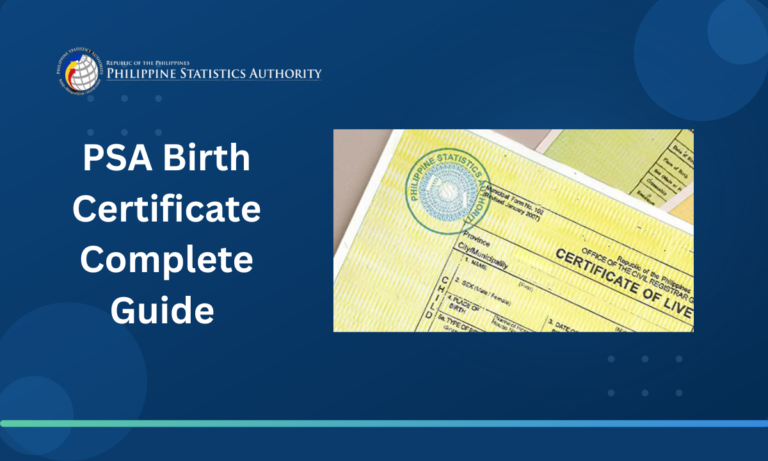
Without a registered birth certificate, a person effectively has no legal existence in the eyes of the state. They can’t get a passport, enroll in school without complications, open a bank account, or claim inheritance rights. Civil registration is what turns a biological fact (being born) into a legal fact (being recognized as a citizen with rights).
In February 2022, the Philippine Statistics Authority (PSA) led the 32nd edition of this observance three decades and two years after the tradition began in 1991.
Why a Whole Month Is Dedicated to This
The Philippines doesn’t dedicate a month to civil registration for ceremony’s sake. The country still grapples with unregistered births in remote and indigenous communities, delayed registrations due to distance or cost, and widespread confusion about how to correct or update civil registry records. Civil Registration Month exists to chip away at these gaps through public education, free services, and direct community outreach.
The Legal Basis: Presidential Proclamation No. 682
The annual observance traces back to a single legal document: Presidential Proclamation No. 682, signed by then-President Corazon C. Aquino on January 28, 1991. The proclamation formally declared February of every year as Civil Registration Month, giving the PSA (then the National Statistics Office) a recurring mandate to promote awareness of civil registration’s legal, administrative, and statistical value.
This builds on an even older foundation: Act No. 3753, also known as the Civil Registry Law, enacted on February 27, 1931. This law established the country’s civil registration system and made it compulsory to record births, deaths, marriages, and other civil status events a requirement that remains essentially unchanged in principle today, even as the technology behind it has transformed completely.
In short:
- 1931 — Act No. 3753 creates the modern Philippine civil registration system.
- 1991 — Proclamation No. 682 declares February as Civil Registration Month.
- 2022 — The PSA marks the 32nd consecutive observance under this proclamation.
The 2022 Theme Digital Transformation in Civil Registration
Each year’s celebration carries a specific theme that reflects the PSA’s current priorities. For February 2022, that theme was:
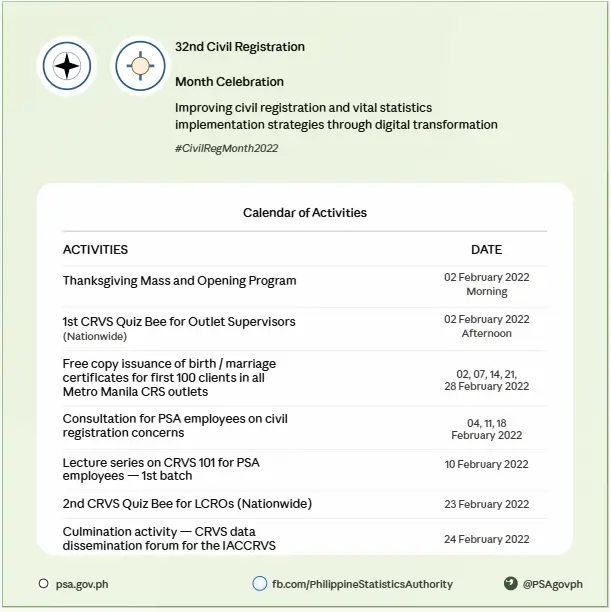
“Improving Civil Registration and Vital Statistics Implementation Strategies through Digital Transformation”
This wasn’t a randomly chosen slogan. It arrived at a moment when the COVID-19 pandemic had already forced government agencies across the Philippines to rethink how they deliver services without requiring long, in-person queues. The PSA’s emphasis on digital transformation signaled a broader shift already underway: online appointment systems, electronic document requests, and digitized civil registry archives designed to make essential records more accessible regardless of where a person lives.
For everyday Filipinos, this theme translated into something practical a push toward requesting PSA documents online instead of traveling to a regional office and waiting in line for hours.
Activities During the 32nd Civil Registration Month
The PSA did not let the month pass with token gestures. Field offices nationwide, working alongside city and municipal Civil Registrars, rolled out a mix of public-facing and internal activities. Here’s what the celebration typically included:
- Civil Registration Quiz Show — An awareness-building competition testing knowledge of civil registration laws, processes, and terminology, often hosted through interactive platforms.
- Poster and Slogan-Making Contest — A creative outlet for employees and the public to interpret the year’s digital transformation theme.
- Free Document Issuance — Free copies of PSA birth and marriage certificates for the first 100 clients at participating Metro Manila Civil Registration System (CRS) outlets.
- Employee Consultation Sessions — One-on-one sessions where PSA staff could raise and resolve civil registration concerns.
- Lectures and Trainings — Sessions for both PSA personnel and Civil Registration and Vital Statistics (CRVS) staff aimed at sharpening implementation strategies at the local level.
- Streamer Displays — Visual banners posted at PSA and Local Civil Registry offices to build public awareness throughout February.
- Mobile Registration Drives — Outreach activities bringing registration services directly to underserved barangays and schools.
A Closer Look: What Happened on the Ground
Regional execution varied, which is part of what made the month feel genuinely community-driven rather than top-down. For instance, PSA’s Cordillera Administrative Region office held a Civil Registration Quiz via the Kahoot web game application on February 28, 2022, with five staff members recognized as winners. Meanwhile, PSA Region V’s Catanduanes office combined a motorcade, a thanksgiving mass, radio guesting, and a CRVS lecture-forum for schoolteachers — showing how the same national theme adapted to local context and resources.
This pattern is worth noting if you’re researching civil registration topics: PSA field offices have a fair amount of autonomy in how they execute the national directive, which is why activity reports from different regions read quite differently even though they share the same overarching theme and legal basis.
How Regional PSA Offices Celebrated the Month
To put the scale of the celebration in perspective, here’s how a few regional PSA offices approached February 2022:
| Region | Notable Activity | Highlight |
|---|---|---|
| PSA RSSO-10 (Northern Mindanao) | First Quarter 2022 Regional Inter-Agency Committee on CRVS meeting | Coordinated with DOH, DILG, DepEd, DFA, POPCOM, DSWD, and DOJ |
| PSA RSSO-6 (Western Visayas) | Radio and TV guesting for public awareness | Kicked off the month with media appearances to address common queries |
| PSA RSSO CAR (Cordillera) | Civil Registration Quiz via Kahoot | Five winners recognized with certificates and tokens |
| PSA RSSO V – Catanduanes | Lecture-forum, motorcade, and mobile registration | Reached schoolteachers, parents, and unregistered individuals directly |
This cross-regional coordination is itself a small case study in how the Philippines’ civil registration system functions: a national legal mandate, implemented through semi-autonomous regional offices, in partnership with local government units and other national agencies.
PSA Document Types, Prices, and Validity
One of the most practical things people search for during Civil Registration Month isn’t the history it’s how to actually get a document. Here’s a quick reference for PSA civil registry documents and their standard processing details.
| Document Type | Typical Price (PSA Serbilis/PSAHelpline channels) | Standard Validity for Most Transactions |
|---|---|---|
| PSA Birth Certificate | ₱290 | 60 days from release |
| PSA Marriage Certificate | ₱290 | 60 days from release |
| PSA Death Certificate | ₱290 | 60 days from release |
| PSA CENOMAR (Certificate of No Marriage) | ₱345 | 60 days from release |
| PSA CENODEATH (Certificate of No Death Record) | ₱345 | 60 days from release |
Important note: Pricing and validity periods can change, and different receiving institutions (banks, embassies, schools) sometimes set their own acceptable validity window some require documents issued within the last 3 or 6 months. Always confirm current pricing on the PSA’s official channels and check validity requirements with the specific institution requesting the document, since “60 days” is a common convention rather than a fixed legal rule.
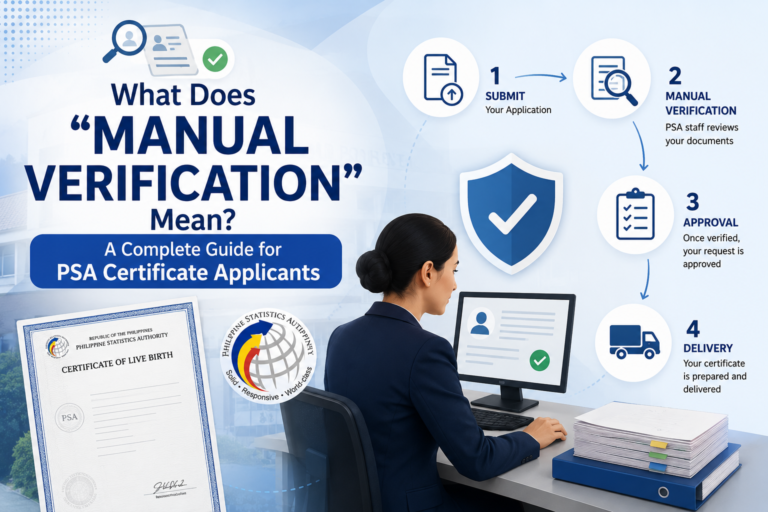
How to Request a PSA Civil Registry Document Online
If Civil Registration Month’s digital transformation theme inspired you to skip the long lines, here’s a general step-by-step process for requesting documents online:
- Determine the exact document you need. Decide whether you need a birth certificate, marriage certificate, death certificate, CENOMAR, or CENODEATH, since each serves a different legal purpose.
- Gather the required personal information. This typically includes the full name as registered, date and place of birth or event, and parents’ or spouse’s names as applicable.
- Choose an official or PSA-authorized request channel. Requests can be filed through the PSA’s online portal or through authorized partner platforms.
- Fill out the request form accurately. Double-check spelling, especially for names with multiple possible spellings, since mismatches are the most common cause of delayed or rejected requests.
- Pay the applicable fee. Most platforms accept online payment methods such as debit/credit cards, e-wallets, or over-the-counter payment centers.
- Choose delivery or pickup. Many requests are delivered directly to your address, while some allow pickup at designated outlets.
- Track your request. Use the reference or tracking number provided after payment to monitor processing status.
- Verify the document upon receipt. Check that all details match your records, and report discrepancies immediately through official channels.
Expert tip: If you’ve previously had your record corrected through Republic Act No. 9048 (clerical error corrections) or RA 10172 (corrections involving day, month of birth, or sex), make sure you’re requesting the annotated version of your certificate. Many first-time requesters unknowingly order the unannotated version, which doesn’t reflect the legal correction and can be rejected by receiving institutions.
Civil Registration Month Through the Years
| Year | Edition | Theme Focus |
|---|---|---|
| 2020 | 30th | Strengthening CRVS amid emerging public health needs |
| 2021 | 31st | Adapting registration services during the pandemic |
| 2022 | 32nd | Digital transformation of CRVS implementation strategies |
| 2023 | 33rd | Reinforcing Filipinos’ duty to register civil status events |
This progression shows a clear trajectory: from pandemic-era adaptation toward a sustained push for digital service delivery — a trend that has only accelerated since 2022.
Why Civil Registration Still Matters in 2026
It’s worth pausing here, since you’re reading this years after the 32nd celebration took place. Civil registration isn’t a one-time historical topic — it’s an ongoing system that affects nearly every major life transaction Filipinos undertake, from college enrollment to overseas employment applications to retirement benefit claims.
The digital transformation theme introduced in 2022 wasn’t a one-off campaign slogan. It reflected a direction the PSA has continued building on in the years since, with more services becoming available through online channels and fewer requiring in-person visits to a regional office. If you’re researching PSA documents today, the practical lesson from the 32nd Civil Registration Month still holds: know your document type, double-check your personal details before submitting a request, and use official or PSA-recognized channels to avoid delays or fraud.
FAQs PSA Celebrates the 32nd Civil Registration Month
What is the theme of the 32nd Civil Registration Month?
The theme was “Improving Civil Registration and Vital Statistics Implementation Strategies through Digital Transformation,” reflecting the PSA’s push toward online and digitized registration services in 2022.
Who signed Presidential Proclamation No. 682?
Former President Corazon C. Aquino signed Proclamation No. 682 on January 28, 1991, declaring February of every year as Civil Registration Month.
Why is February chosen as Civil Registration Month?
February was selected to commemorate the anniversary of Act No. 3753, the Civil Registry Law, which was enacted on February 27, 1931, and established the country’s modern civil registration system.
What activities happen during Civil Registration Month?
Common activities include civil registration quiz shows, poster and slogan-making contests, free certificate issuance for limited clients, mobile registration drives, employee consultation sessions, and CRVS training lectures across PSA field offices.
How much does a PSA birth certificate cost?
PSA birth certificates typically cost around ₱290 through official online request channels, though prices can vary slightly depending on the platform and delivery option chosen.
How long is a PSA certificate valid?
Most receiving institutions accept PSA certificates issued within 60 days, though some entities like embassies or banks may require more recently issued copies, so it’s best to confirm directly with the requesting institution.
Can I request a PSA certificate online?
Yes. The PSA offers online request channels for birth, marriage, and death certificates, as well as CENOMAR and CENODEATH, allowing delivery to your address or pickup at select outlets.
What is the difference between CENOMAR and CENODEATH?
A CENOMAR (Certificate of No Marriage Record) confirms that a person has no recorded marriage in the PSA database, while a CENODEATH (Certificate of No Death Record) confirms that a person has no recorded death — commonly required for claims, benefits, or legal verification purposes.
What government agency leads Civil Registration Month?
The Philippine Statistics Authority (PSA) leads the national celebration, coordinating with city and municipal Civil Registrars and partner agencies such as the Department of Health and the Department of the Interior and Local Government.
Is Civil Registration Month still observed today?
Yes. The observance continues annually every February under the same Proclamation No. 682, with the PSA marking the 33rd, 34th, and subsequent editions in the years following 2022, each with its own theme.
Conclusion
The 32nd Civil Registration Month wasn’t just an anniversary it marked a deliberate pivot toward digital service delivery that has continued shaping how Filipinos interact with the PSA in the years since. A few things worth remembering:
- Civil Registration Month is observed every February under Presidential Proclamation No. 682, signed in 1991.
- The legal foundation for civil registration itself dates back to Act No. 3753 from 1931.
- The 2022 theme centered on digital transformation, foreshadowing the PSA’s continued shift toward online document requests.
- Practical activities free document issuance, quiz shows, mobile registration made the observance tangible for ordinary Filipinos, not just symbolic.
- Knowing your document type, current pricing, and validity requirements remains essential whether you’re requesting a certificate today or researching the topic years later.